
Trailblazing physician recognized for media advocacy

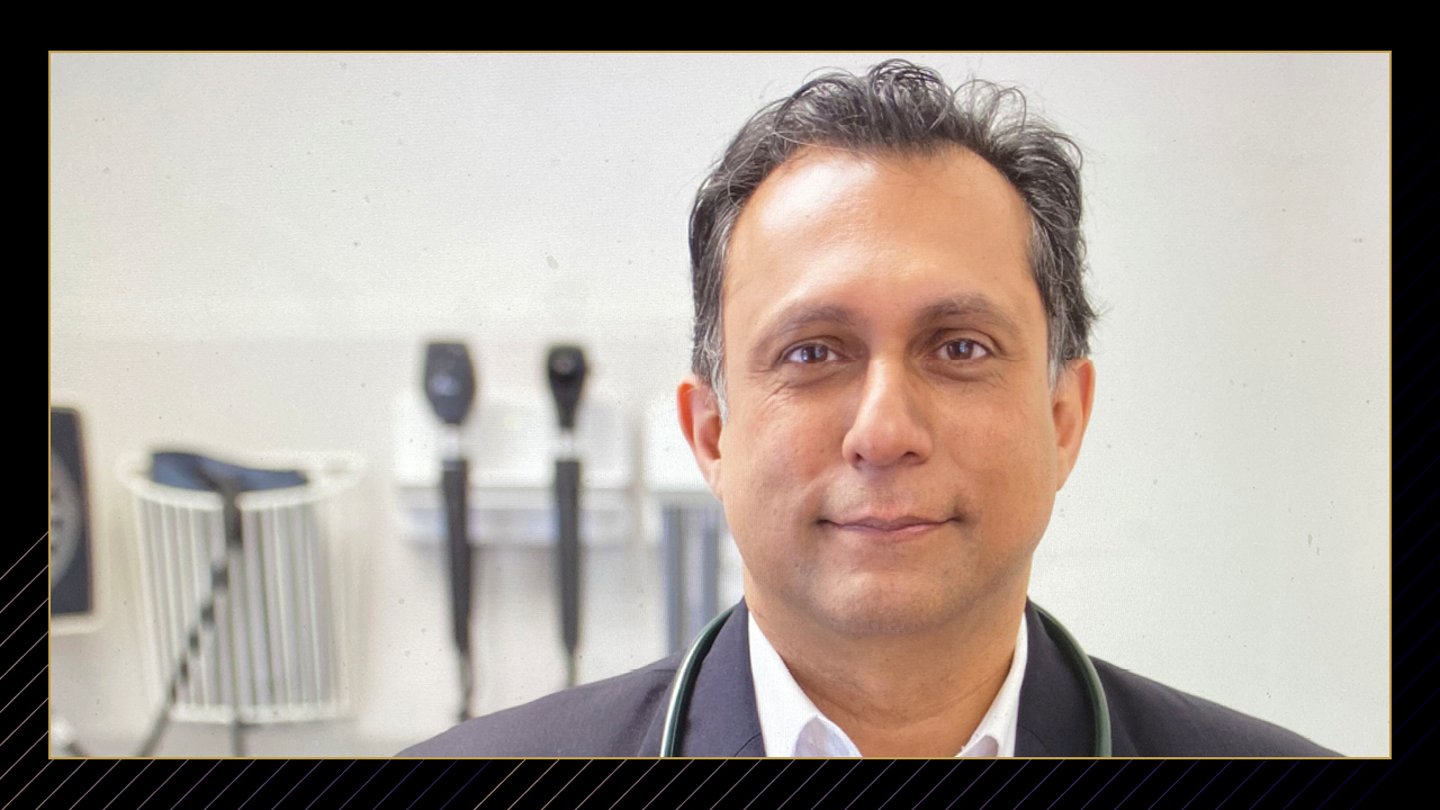
Dr. Alykhan Abdulla has been honoured with the Medical Post’s Media Engagement Trailblazer Award for his contributions to public health discourse. The award celebrates his consistent and effective use of media to advocate for patients, address critical health issues and inspire his colleagues to engage in public conversations.
For over 20 years, Ottawa’s Dr. Abdulla has been a respected voice in Canadian healthcare, with a media output approaching 1,000 contributions. In the last 18 months alone, he has authored or contributed to nearly 100 articles, interviews, op-eds and broadcasts in major national and regional outlets like The Globe and Mail and CBC. He tackles complex and pressing issues, including vaccine hesitancy, the return of measles and the ongoing family doctor crisis.
What makes Dr. Abdulla a true trailblazer is not just the volume of his work, but the clarity and impact of his messaging. He bridges the gap between clinical realities and social accountability, making complex health system issues understandable. His forward-thinking approach has allowed him to lead conversations on topics such as Indigenous reconciliation and the administrative burdens driving physicians out of family medicine.
Medical Post Awards
The Medical Post Awards recognize Canadian doctors and are selected by panels of physician juries. Coverage of this year’s recipients is here: The 2025 Medical Post Awards winners.
Dr. Abdulla’s influence extends beyond his own contributions. He mentors other physicians, encouraging them to find their voice and engage in media advocacy. By sharing his expertise and opportunities, he is helping build a movement of engaged and informed physician advocates, ensuring that the next generation of doctors will continue to speak up for the health system.
His work has shaped public and political discourse, establishing him as a trusted leader in media engagement and a deserving recipient of this award.
Judge quote: “Dr. Alykhan Abdulla’s publications and social media presence has been prolific and covered a broad variety of areas. He has not shied away from coverage of controversial topics and in doing so he has opened the door to deeper conversations about important healthcare issues.”
- Q&A
Q: Given burnout in the healthcare system struggling, what do you see about the value of recognition in the physician community these days?
Burnout is a big thing that affects all of the physicians out there, whether they be in our local area, or nationally or internationally. It’s a sense of feeling unseen, that you’re just another cog in the machine.
What’s amazing about acknowledgement is that it reconnects us to the meaning of the work that we do in the first place.
Recognition doesn’t fix any of the systemic issues. But it does humanize the system. What it does is it builds a sense of solidarity. It restores purpose. It gives us an understanding of why our individual contributions matter.
What’s more important than that is that recognition is a tiny, small act with an incredibly oversized impact. What it does is that it makes a difference between disengagement and resilience. That’s what I think is so incredible about it.
Q: Tell me about your community. How does the Medical Post Awards help the community?
The community that I come from is the community of family medicine. Not only Ottawa and Ontario, but it really is the whole idea of family medicine or primary care. When I’m talking about family medicine, I’m talking about relationship medicine: between doctors, patients and communities. And we’re struggling. Family doctors are struggling.
Now, all physicians are struggling, let’s be honest about that, but family medicine is particularly struggling because young medical students are not interested in this work.
They hear about the financial challenges of running a small business, and they say, “no way, not for me.” Then, they’re being told that AI and other healthcare providers, like nurse practitioners and pharmacists, can take over the work that they have. So they have low value for it, they don’t get remunerated well for it.
What I want to be talking about is the idea that in the family medicine world of listening and caring and advocacy, we find that longitudinal comprehensive care (from) inception of a fetus to the very aged, and the high relationships that you have between families for decades at a time, and knowing quite a bit about every little branch of medicine and going back every day and learning every day, this actually can be enthusiastic medicine. So when the Medical Post recognizes such things, family doctors that deal with advocacy, that engage other people, that trailblaze, it actually creates a sense of pride. It strengthens identity and it reminds us why this calling is so vital.
Q: What inspires you about healthcare providers. What motivates you to keep doing what you do these days?
There’s so much that inspires me about the healthcare profession because it really is not about the obstacles and the administration, it really is the idea of what is the joy in the work. Think about this: the privilege to be invited into people’s lives at their most vulnerable moments. This happens day in, day out.
It creates that sense of bonding between people, that sense of trust that they have in you, and that you actually have in your patients to follow through on the advice that you’re giving them. Now it doesn’t always work out, let’s be honest, you got to build that trust.
So, I can think back to times when the littlest child gives me a hug. Or, all of a sudden, there’s that sense of relief when there’s an understanding from the patient of exactly what’s happening to them in this moment.
Or, when someone says, “I feel better.”
Those are amazing moments. If you can think back to those moments and grow from that, you know that that profound human work, no matter how demanding it is, reminds you every single day that a small act of care at the right time can change the trajectory of someone’s life forever. And that’s what keeps me committed.
Q: Tell us about a challenge you’re facing in leading change in healthcare, and how are you overcoming it?
The challenges are innumerable, but I’m going to mention a few. The fact that a million people in Ontario can’t find a family doctor, over six million in Canada. That my colleagues are feeling overwhelmed or burnt out.
And there’s a sense of reducing their hours in an effort to make sure that they keep themselves human in the process, to prevent themselves from being drowned in paperwork . . . and working in a system that is increasingly fragmented and inequitable.
But remember, these challenges that are happening in primary care, they’re not abstract. A mammogram that’s delayed leads to a biopsy that’s delayed, that leads to a diagnosis that’s delayed, that leads to cancer therapy that’s delayed, that affects the length of someone’s life of being a mother or a wife.
What I really think is, if we spend the time and the energy—and that’s why these awards matter—that we’re able to push for policies that actually match what patients need and modernize outdated legislation and fight for team-based primary care.
We know that universal healthcare isn’t just a slogan, it’s a reality that we must fight for day in and day out. And despite moral injury, despite the idea that we feel overwhelmed in the tsunami of troubles and obstacles that are being thrust upon us, that little small reforms can make a difference.
When we speak up for colleagues and patients, we actually can turn the frustration into hope.
Q: Thinking about your writing, can you think of any anecdotes where you realized, “oh, this bit of writing did this thing?”
About a year and a half ago, I wrote a piece that was fortunate enough to get into the National Post, and it really was the idea that we have a healthcare system that truly is broken. . . .
When a young woman doesn’t have access to the right amount of care at the right time, her cervical cancer ends up not diagnosed, she ends up having an entire hysterectomy; she can no longer have children ever again.
An example like that, what it shows is that we have allowed too much deterioration of a system.
So where that led is the local MPP sat with me and said, “I was really touched by that, and I really want to do a private member’s bill in regards to moving this process forward, that certain diagnoses must be fast-tracked.”
Now, unfortunately, it was a Liberal MPP, and it was a time when we do not have Liberals in power, so it died on the order paper, but it did make it to the point that it was actually read in the house at one point. But look, change takes time. You’re not going to win every time. You gotta just keep fighting.