
Drowning in the pharmacy: What happens when the ones providing care need help to stay afloat?

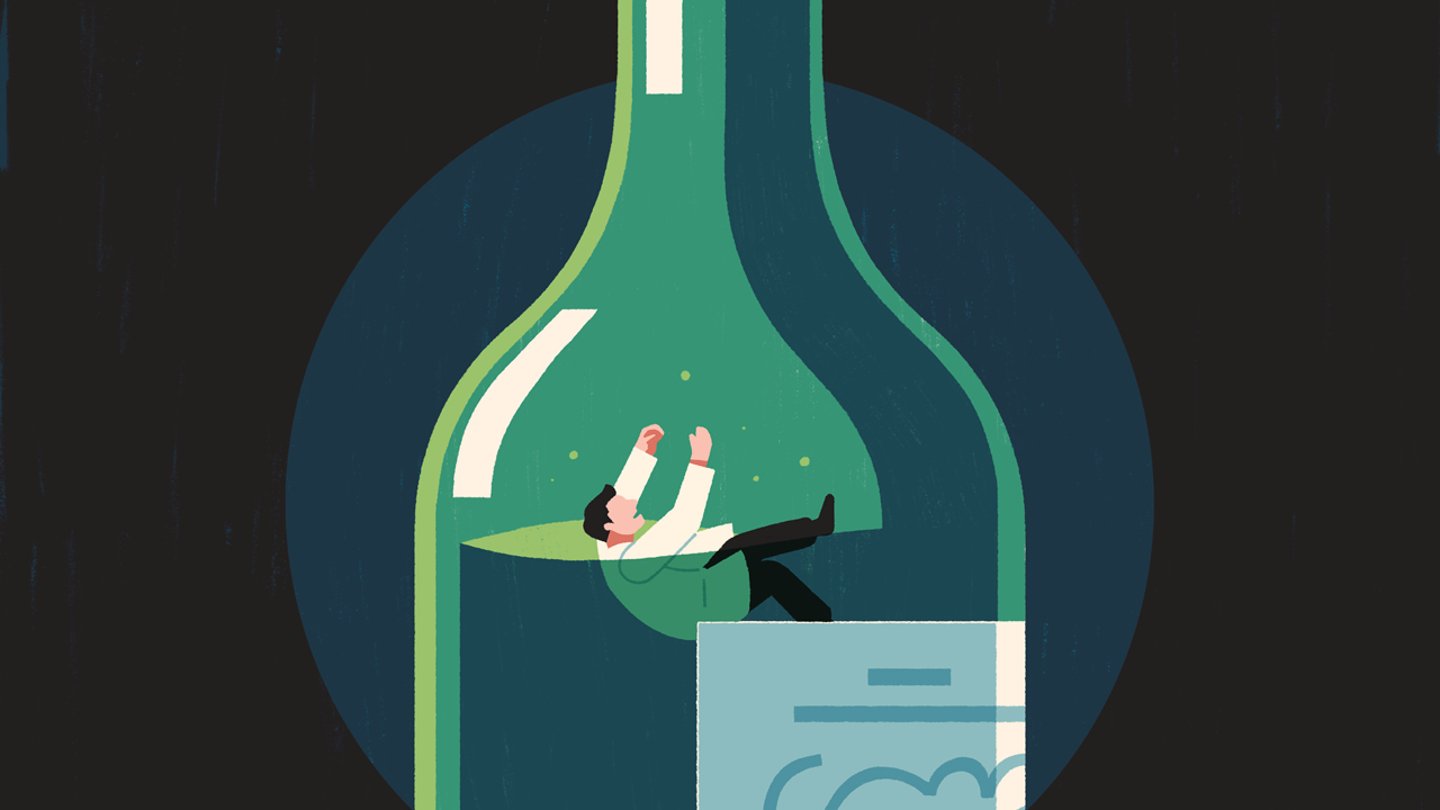
Having a few drinks every day to unwind after a long pharmacy shift was par for the course for Toronto pharmacist/owner Jas Singh Combow. “Even if I came home at midnight, I would drink, eat and go to sleep—and then repeat it all the next day,” he says. “Alcohol was a good part of my life since I was a 19-year-old binge-drinking on weekends in pharmacy school, and eventually it took over.”
As a franchise owner at a big chain pharmacy, he had a reputation for being a big drinker at company parties but wasn’t the only one, he stresses. Then one day his employer refused to renew his franchise agreement. “They changed the locks on the store and made me feel like a criminal,” says Singh Combow, who never drank on the job. “I definitely went through some post-traumatic stress from that experience and then started drinking even more as a relief pharmacist.”
It took an ultimatum from his wife and the realization that he was missing way too many moments in his young daughter’s life to turn a corner towards recovery. “I went to India for five weeks and it transformed me,” says Singh Combow who has been sober since 2018 and now, at the age of 50, owns three independent pharmacies. “My
younger brother and father passed away from alcoholism, but I’m one of the lucky ones—I hope my story helps other pharmacists who are struggling to realize there is a way out.”
Singh Combow’s story is not unique. For this article numerous other Canadian pharmacists, in various stages of addiction recovery, came forward to share their experiences. Other than Singh Combow, none were comfortable publishing their names or even locations for fear of losing their jobs and reputations. They also attributed a perpetually stressful work environment for aiding their addictive behaviours.
“I felt like I’d earned my bottle of wine after I got off work, and then I moved to vodka,” says Molly* who worked in a busy community pharmacy before taking a medical leave and eventually getting help. “I would come in hungover and be less patient, and I’m sure my colleagues suspected, but I didn’t have a supportive boss and there was a huge amount of fear and shame in coming forward.”
She recalls thinking “why can’t I fix this when I help other people,” and was dismissive of support groups like Alcoholics Anonymous for being unscientific. (She now credits the organization for helping her stay sober for the last 7 years.) “I think as pharmacists we tend to focus on scientific facts and evidence rather than the spiritual side of healing.”
Today, as a pharmacist consultant, Molly says she misses the day-to-day patient care aspect of her previous job but can’t see herself working in a chaotic pharmacy ever again if she wants to stay healthy.
This does not surprise Jason Perepelkin. The associate professor at the University of Saskatchewan’s College of Pharmacy and Nutrition has been studying burnout in the pharmacy profession for the last six years through qualitative studies and interviews across the pharmacy sector.
In interviewing pharmacists, he says several spoke of knowing colleagues who were coping with burnout and work pressures post-pandemic by abusing substances such as alcohol, cannabis and prescription drugs. “There has always been [substance] abuse but it’s perhaps more prominent now and I think people who are struggling don’t want to be outed,” he says. “As a healthcare professional you should know that it’s not a good solution but it’s hard when you’re in the middle of trying to juggle a stressful work environment—and responsibilities as a spouse, parent and caregiver of other people.” U.S. studies have shown that 10%–15% of healthcare providers will misuse substances during their lifetime. They’re also underevaluated and undertreated for addiction and substance abuse due to fear of negative social, professional, legal or financial consequences. If you’re someone who abuses substances, Perepelkin says the worry of being flagged and monitored for everything you do in the future prevents people from speaking to their employers and seeking help.
Critical steps to support pharmacists
To better support pharmacists with substance abuse disorders induced by stress or mental health struggles, Perepelkin says pharmacy organizations need to put more effort into promoting the resources available for their members and the fact they are confidential. “You need to do more than just put out an email that says, ‘are you aware of this,’ and actually talk about it at conferences, on social media and elsewhere,” he says, adding that there should be even more focus on health and wellness in pharmacy schools. “The first time I meet our students when I go into a therapeutics class, I talk from a patient perspective as someone with anxiety and depression…and then I have quite a few students reach out to me to say they don’t feel as awkward and out of place because they realize they’re not alone.”
Where can I get help?
Many provinces offer addiction resources and supports through their pharmacy provincial or regulatory bodies. Other sources for addiction support include:
ConnexOntario is a free and confidential 24/7 link to community mental health and addiction services in Ontario, offering support through phone, chat, text and email.
Canadian Addiction Treatment Centres is the largest provider of recovery programs and supports for substance use disorders/addictions.
There should be more awareness and compassion among pharmacy colleagues overall when it comes to potential substance issues. For example, if a colleague seems edgy, unkempt and displays sudden personality changes, or if they’re constantly run down with a cough or flu, it could be a signal that they are struggling with a substance use disorder and need support.
“It’s about understanding that healthcare providers are human dealing with stresses too, because thinking of them as heroes who can handle anything plays into that need for them to hide their issues,” says Kyila Puryk, a medical social worker with the Saskatchewan Health Authority. “There’s this stigma around addiction but in some cases, people are using substances to be able to continue working day in and day out serving the public.”
She says normalizing the conversation around mental health and addiction, and being comfortable seeking the support needed to treat it, means healthcare providers should be able to take time off to go to therapy and talk to their peers and employers about daily stresses without the fear of consequences.
As a pharmacist and mother to a son who started drinking alcohol to self-medicate and eventually progressed to cocaine, Sarah* says she too needed to wrap her head around the fact that addiction is a disease just as diabetes and cardiovascular disease are. When people abuse alcohol or other substances, their brain’s hedonic set point (or baseline level of happiness or well-being) changes and desensitizes over time so they eventually need more and more to reach a state of well-being. “If your set point gets high enough you need substances to simply feel alive and function,” she says. “I think we should stop calling [addiction] a disease of choice because when your hedonic set doesn’t work anymore it’s like the pancreas not working properly in people with diabetes.”
The added challenge for someone dealing with addiction, she adds, is that they are trying to manage a substance use disorder while also dealing with the underlying issues that prompted the abuse in the first place (e.g., anxiety, depression etc.). “It’s a terrible, Pandora’s Box of challenges,” says Sarah. “You’re always in recovery because your brain has changed and even one drink can cause your hedonic point to shoot right back up.”
Just as a heart attack patient is able to enroll in a Healthy Heart Program with a multidisciplinary team of providers who are monitoring recovery and helping to prevent another cardiovascular event, Sarah wishes there was a better connection between acute care treatment for addiction and community support. “A user has two communities even in recovery: the people who understand them, and their family, co-workers and others who have no clue.”
Other addictions
On top of substance abuse disorders, there are also behavioural addictions that are becoming more and more prominent in the digital age. A comprehensive meta-analysis during the COVID-19 pandemic showed that approximately 11% of individuals globally experienced some form of behavioral addiction,1 whether that be smartphone, gaming, sex addiction and others. John*, a pharmacist in western Canada, has been in a 12-step program for compulsive sexual behaviour disorder since 2018. “I’m not at risk of having an overdose, but some of the people with my problem have ended up in prison,” he says, noting the presence of at least one other pharmacist in his support group. “It’s an exhausting acting-out and shame cycle.”
When he was provided with a company laptop for a new clinical pharmacy role, he knew it might be a problem so he told his employer about his addiction. “They were very supportive and adjusted the technology so it could keep me mostly protected,” he says. “But it’s still not something I talk about with most people and my parents don’t know.”
While he finds his work very rewarding and considers himself a good pharmacist, he admits to having a tendency to act out in unhealthy sexual behaviours in his private life when he feels overworked or stressed out. “Setting boundaries for work-life balance can be challenging, especially for pharmacists,” he says.
Like Perepelkin, John says focusing on the pharmacy student population to raise awareness on how to deal with stressors in a healthy way may help in curbing addiction issues later in life. “If I had recognized my behaviour as being on the precipice of this addiction in my mid 20s as a student, I could have intervened a lot sooner.”
*Not the pharmacists’ real names.
Rosalind Stefanac is a Toronto writer specializing in pharmacy, retail and business subjects.
Reference: